Britain's ambitious housing targets are colliding with labour shortages, planning constraints and weaker buyer demand.
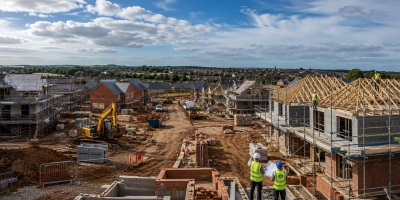
The British housing market finds itself facing an increasingly complex contradiction. Demand for homes continues to outstrip supply in many regions, affordability remains one of the country's most pressing economic issues, and policymakers continue to emphasise the importance of increasing housing delivery. Yet despite these pressures, the pace of new construction remains well below the level required to satisfy long-term demand.
For successive governments, increasing housebuilding has represented both an economic objective and a social necessity. Higher levels of residential construction are expected to improve affordability, stimulate economic activity, create employment and reduce pressure on the rental sector. However, the practical reality facing developers and local authorities remains considerably more complicated.
The current government has committed to delivering 1.5 million additional homes in England during the current Parliament, equivalent to an average of approximately 300,000 homes per year over five years. Yet many industry experts and housing analysts believe that current delivery rates remain insufficient to meet that ambition.
Source: UK Government housing programme and parliamentary statements, 2025-2026.
Housing delivery continues to lag behind national ambitions
The scale of the challenge becomes clear when recent delivery figures are examined more closely.
Official estimates indicate that approximately 208,600 net additional dwellings were added to England's housing stock during the financial year 2024/25, representing a decline compared with the previous year's total of 221,410 homes.
The figures include new-build properties, conversions and changes of use rather than solely newly constructed homes. Even using this broader measure, current delivery remains substantially below the level required to achieve the government's long-term objective.
If the target of 1.5 million homes over five years is to be achieved, England would need to average approximately 300,000 additional homes every year.
The difference between current annual delivery and the required pace is therefore approximately:
- Required annual delivery: 300,000 homes
- Latest annual delivery: 208,600 homes
- Annual shortfall: 91,400 homes
This shortfall represents approximately 30.5% below the annual pace required, calculated by dividing the gap of 91,400 homes by the annual target of 300,000.
Source: Full Fact analysis of official housing supply statistics, May 2026.
The figures help explain why many professionals within the construction and property sectors remain sceptical about the likelihood of reaching the target within the current parliamentary term.
Planning reform is expected to play a central role
Planning constraints have become one of the most debated issues in British housing policy.
Developers frequently argue that lengthy approval processes, local objections and regulatory complexity slow housing delivery and increase costs.
The government has therefore introduced significant planning reforms designed to accelerate development, particularly around transport hubs and brownfield land.
Recent changes include:
- Greater emphasis on brownfield redevelopment.
- Higher-density construction around railway stations.
- Faster approval processes for compliant schemes.
- Simplified biodiversity requirements for smaller developments.
- Measures designed to improve planning certainty.
Ministers argue that these reforms represent the largest overhaul of planning rules in more than a decade and are essential if housing supply is to increase significantly.
Source: UK Government planning reform announcements, December 2025.
Supporters believe these measures could unlock thousands of additional homes over the coming years.
Critics, however, argue that planning reform alone cannot solve deeper structural problems affecting the sector.
Labour shortages continue to affect construction output
One of the most significant challenges facing the industry is the availability of skilled labour.
Construction companies across Britain continue to report difficulties recruiting bricklayers, electricians, carpenters, groundworkers and site managers.
The ageing workforce, lower numbers of apprentices entering the sector and reduced international labour availability following Brexit have all contributed to growing skills shortages.
Industry experts warn that even if planning approvals increase substantially, construction capacity may struggle to keep pace.
Recent assessments suggest that the workforce challenge could become one of the largest barriers to delivery during the second half of the decade.
Source: Reuters analysis of UK construction labour shortages, December 2024.
The impact of labour shortages includes:
- Longer construction times.
- Higher wage costs.
- Reduced contractor availability.
- Delayed project starts.
- Greater delivery uncertainty.
For developers already operating within tight margins, these pressures can significantly affect project viability.
Higher costs continue to challenge developers
The economics of housebuilding have changed considerably since the pandemic.
Material prices, energy costs, financing expenses and labour costs have all increased sharply over recent years.
While inflationary pressures have moderated compared with previous peaks, many developers continue to operate in a significantly more expensive environment than before 2020.
At the same time, higher mortgage rates have weakened buyer demand in certain areas of the market.
This creates a difficult commercial balance.
Developers require higher sale prices to maintain profitability, but buyers face increasing affordability constraints.
Industry surveys identify several major cost pressures:
- Construction materials.
- Skilled labour.
- Energy and utilities.
- Borrowing costs.
- Regulatory compliance.
- Building safety requirements.
Many housebuilders have therefore slowed project launches or delayed developments until market conditions improve.
Planning permissions and housing starts have weakened
A further concern is the decline in early-stage housing indicators.
Recent market research suggests that planning consents have fallen significantly while housing starts have also declined.
Savills estimates that new-build completions in England could fall to approximately 150,000 homes annually by 2028, well below the government's annual objective of 300,000 homes.
The same analysis estimates that average annual completions may reach approximately 167,500 homes per year between 2025 and 2030.
If realised, this would amount to just over half of the government's intended annual delivery rate.
Source: Savills research reported by the Financial Times, June 2026.
The report identified several major challenges:
- Falling planning approvals.
- Lower housing starts.
- Labour shortages.
- Construction inflation.
- Weak buyer demand.
- Higher borrowing costs.
The findings have intensified debate surrounding the realism of current housing targets.
New-build indicators reveal a slowing pipeline
Government estimates increasingly rely on Energy Performance Certificate lodgements as an early indication of housing delivery trends.
Recent data showed approximately 52,760 new-build EPCs were lodged during the latest 13-week reporting period, representing a decline of approximately 1% compared with the same period one year earlier.
Although relatively small in percentage terms, the figures indicate that output growth remains fragile.
Because EPCs are generally lodged close to completion, they provide one of the earliest available signals regarding future housing supply.
Source: UK Government housing supply indicators, 2026.
Housing analysts view these figures carefully because they often provide an earlier indication of market direction than annual completion statistics.
Demand remains strong despite affordability pressures
Ironically, demand for housing itself remains relatively resilient.
Population growth, smaller household sizes, international migration and changing demographic trends continue to generate long-term demand for additional homes.
The shortage is particularly acute in areas with strong employment markets and limited land availability.
The consequences of insufficient supply extend beyond house prices alone.
Housing shortages can affect:
- Labour mobility.
- Economic productivity.
- Rental affordability.
- Regional investment.
- Social mobility.
- Household formation rates.
Many economists therefore view housing supply as a national economic issue rather than simply a property market concern.
The rental sector is feeling the consequences
Limited housing supply also contributes directly to rising rents.
When potential buyers remain unable to purchase homes, demand remains concentrated within the private rented sector.
This increases competition for available properties and places upward pressure on rental costs.
Recent official figures show that average private rents reached £1,383 per month in May 2026, an annual increase of 3.3%.
While rental inflation has slowed compared with earlier years, housing costs remain close to record levels in many regions.
Source: Office for National Statistics, Private Rent and House Prices UK, June 2026.
The interaction between ownership affordability and rental affordability means that supply shortages affect households regardless of tenure.
Can Britain build enough homes?
The central question facing policymakers is no longer whether more homes are needed, but whether the country possesses the capacity to build them quickly enough.
The answer depends upon multiple variables:
- Planning reform implementation.
- Labour market expansion.
- Developer confidence.
- Mortgage affordability.
- Infrastructure investment.
- Public acceptance of development.
Few housing professionals dispute the need for additional supply.
The debate instead centres on the speed at which delivery can realistically increase.
A defining challenge for the British economy
Housing has become one of the defining economic and political issues facing modern Britain.
Affordability pressures affect first-time buyers, renters, employers and local communities alike.
The government's ambition to deliver 1.5 million homes reflects the scale of the challenge, but current construction trends suggest that achieving the target will require a significant acceleration in delivery.
For now, the evidence points towards a sector under pressure rather than one experiencing a building boom.
The demand for homes remains strong, the need for supply remains urgent and the political commitment remains clear.
Whether Britain's construction industry can translate those ambitions into completed homes may become one of the most important economic questions of the remainder of the decade.